
Author

A prosperity roadmap and critical next steps for health care.
There’s an urgency behind the need for economic focus in the state of Oregon. Businesses are out-migrating, costs are climbing and unemployment is rising. The governor’s recently announced Prosperity Roadmap aims to tackle these headwinds, but Oregon’s outlook shows clear signs of strain that trickle down through businesses across the state, including the health care sector. The Oregon health care system is at a crossroads, facing increasing labor costs, regulatory burden, financial strain and an immediate need for smarter solutions.
The state says it is navigating significant headwinds. “We face the same headwinds that many other states face today: sluggish job growth, elevated unemployment and declining population trends. These challenges, compounded by business outmigration and underutilized state resources, require more than observation – they demand coordinated and strategic action,” penned Governor Tina Kotek in the first paragraphs of the Prosperity Roadmap issued this December.
The strategy plan lays out three primary objectives: accelerate Oregon’s economic growth, create more living wage jobs and retain and grow Oregon businesses. The plan also aims to improve Oregon’s current ranking of No. 39 on the CNBC list of Top States for Business into the top 10, following a swift plunge 22 places in less than 10 years, including a fall of 11 places in 2024.
Lack of incentives, high taxes and regulation are repeatedly identified as key factors that are minimizing Oregon’s ability to appeal as a great state to do business. In its 2026 Oregon Scorecard, Oregon Business & Industry identified the state as holding the highest effective tax rates across income distribution for joint filers. OBI identifies Oregon as the 7th most regulated state in the entire country.
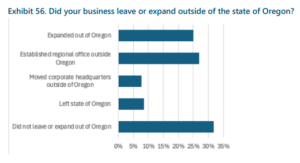
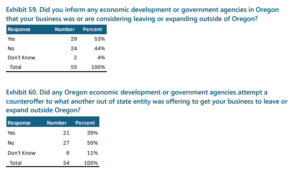
Major business players, like Grants Pass-grown Dutch Bros. and high-performance electric boat manufacturer Valtaic Marine born in Beaverton, among others, are exiting the state. Still more businesses are poised to or considering expansion outside Oregon, according to research from the University of Oregon published last year.
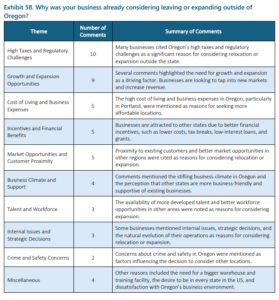
The number one theme: High taxes and regulatory challenges.
As businesses leave for greener economic pastures, thousands of potential jobs, private investment dollars and state taxes are lost.
The City of Portland, representing the states largest tax base, is facing an economic crisis according to a February report by ECOnorthwest. The research and consulting firm reports that nearly 9,000 jobs were lost in 2025, the fourth worst of all metro regions in the nation.
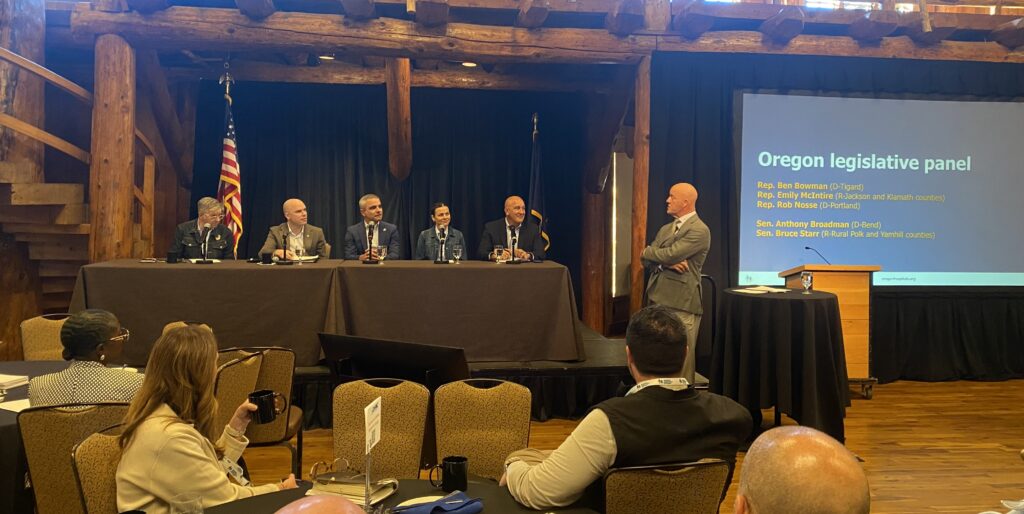
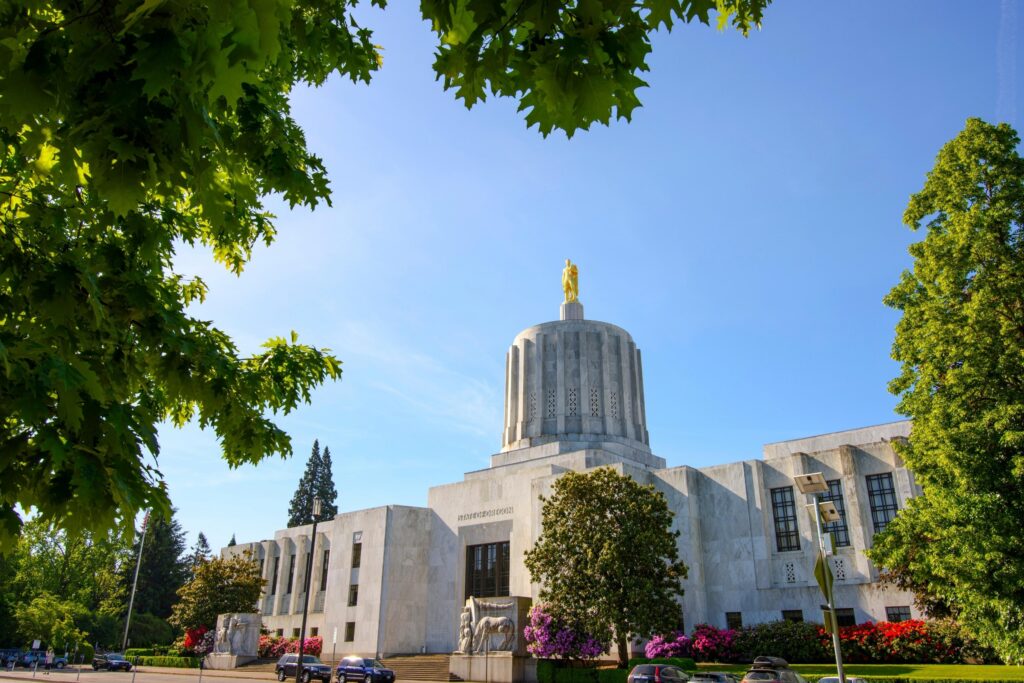
Oregon lawmakers and leaders are voicing concerns about the roadmap and the speed at which change is needed to move the needle back to stability quickly enough.
The Prosperity Roadmap steps identify a new FastTrack program, modeled after programs in Pennsylvania, Maryland and Michigan, and introduced to expedite the permitting process. Along with identifying opportunities to streamline permit requirements for development projects, House Bill 4084 would also inject $40 million into the Industrial Site Loan Fund at Business Oregon.
Of the six steps outlined, one also includes exploring targeted tax changes to spur living wage job creation and increase GDP. The outline includes details for the Chief Prosperity Officer and Governor’s Prosperity Council to develop recommendations for next year’s legislative session. In what is being championed as a bipartisan, non-partisan moment, among the business executives recruited to the table, is Tim Knopp, a former Republican State Senator from Bend, filling the inaugural role of Chief Prosperity Officer.
“What we haven’t been doing is being strategic and intentional,” Kotek said in an interview with the Portland Business Journal. “And we do need some different tools to help grow who’s here and also recruit new businesses. I do think there are some states who have different pots of money, who have been able to spend differently. I want us to be competitive based on what Oregon can do, and the Prosperity Council is going to provide me those other things — like, ‘We should try this, we should try that, have you thought about this?’”
Health care must remain a part of the conversation.
The industry remains one of the major employers and economic drivers in the state. Addressing rising costs and affordability are key to preventing care gaps for our communities. Accessible health care reduces long-term social costs. Strong hospitals create jobs and stabilize local economies. A focus on shared prosperity is essential toward a brighter and healthier future for the state of Oregon.