
Author

Hospitals have long acted as safety nets for the communities they serve. Whether for emergency care, surgery, cancer treatment or a safe place to deliver a baby, community members turn to their local hospital.
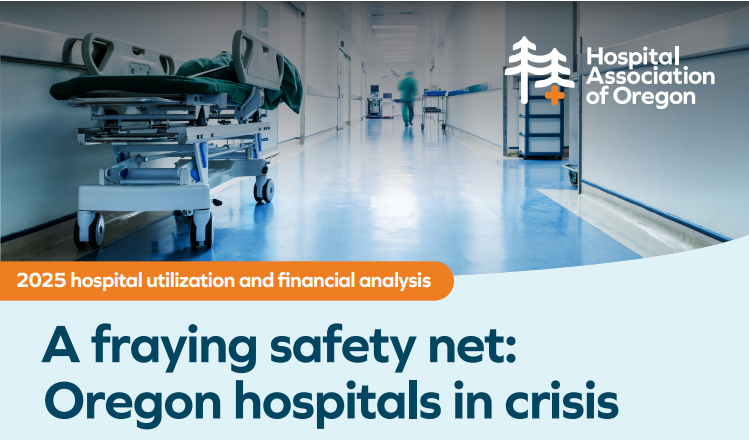
A new report from the Hospital Association of Oregon (HAO), A Fraying Safety Net: Oregon Hospitals in Crisis makes clear what many have been feeling for some time – hospitals throughout Oregon are deep in crisis, with no clear end in sight.
For many health care leaders and clinicians, the report confirms what has been increasingly apparent for years – Oregon hospitals are operating under mounting financial pressure, despite demand for care continuing to rise.
Oregon hospitals suffering sustained losses
According to HAO’s analysis of Oregon Health Authority data, Oregon hospitals collectively lost more than $450 million caring for patients in 2025, bringing cumulative operating losses since 2022 to more than $1.25 billion.
Financial distress is not confined to one type of hospital or one geographic region, though larger hospitals – those with more than 50 beds – have been burdened with the most significant losses. The report found that:
- More than half of Oregon hospitals operated at a loss in 2025.
- Most hospitals with 50 or more inpatient beds were unable to cover the cost of operations, marking the fifth consecutive year of losses.
- More than 8 out of 10 hospital beds were in hospitals with unsustainable operating margins.
These losses are occurring despite increased demand for care.
HAO reported that Oregon hospitals recorded approximately 1.56 million emergency department visits in 2025, an increase of more than 32,000 visits over the previous year. Inpatient discharges also increased by roughly 12,300 cases year over year.
In other words, hospitals are not struggling because less patients are seeking care. They are struggling while providing more care.
Widening reimbursement gap while costs rise
One of the central themes of the HAO report is the growing disconnect between the cost of delivering care and the payments hospitals receive, a topic that we’ve written about on more than one occasion.
Medicaid and Medicare together account for more than two-thirds of hospital utilization in Oregon, according to Oregon Health Authority discharge data cited in the report. This is even more pronounced in more rural communities like the Rogue Valley, where nearly three-quarters of our patients are on Medicaid or Medicare.
HAO reports that Medicaid payments cover, on average, only about half of hospitals’ costs to provide care. Medicare payments cover approximately 70% of cost, which HAO notes is below the national average Medicare cost recovery level cited by the American Hospital Association.
HAO estimates that Oregon hospitals lost $3.2 billion serving Medicare patients in 2025, representing a 20% increase in Medicare-related underpayment compared with the prior year.
This widening reimbursement gap is occurring as hospital expenses continue to increase. Oregon hospital operating expenses increased 57.5% between 2020 and 2025, rising from approximately $14.7 billion to more than $22.2 billion.
Our workforce remains the largest investment category,. According to the report, Oregon ranked second nationally in median wages for health care practitioners, and as we’ve noted in previous posts, Oregon’s nurses have the highest hourly wages in the nation when adjusted for cost of living, and third highest overall.
Investments in caregivers are essential; however, reimbursement growth must match labor, pharmaceutical, supply and operational cost increases in order to remain sustainable.
When government programs reimburse less than actual costs to provide care, hospitals must absorb the losses.
Threat to health care access
Hospitals have always been committed to serving their communities and providing life-saving care to everyone who needs it; however, HAO’s report makes it clear that the status quo is not working.
If Oregon’s funding model for hospitals is not addressed, hospitals will continue to cut service lines or worse, close altogether. Access for patients will worsen. It’s more critical than ever for our policymakers recognize this reality and take meaningful steps to change course.
Recommendations
Asante has been tirelessly advocating for action similar to recommendations in this report:
- Preserve the safety net.
Hospitals are at the breaking point. Chronic underfunding, declining reimbursement and excessive regulatory overreach have threatened access to care. Without intentional and immediate action from our policymakers, hospitals will continue to weaken.
- Cut red tape and regulatory burden. Put resources back into patient care.
Hospitals need immediate relief from unfunded mandates and costly administrative burdens that divert time, staff and dollars away from patients. Policymakers and agencies need leadership to make this a priority.
- Demand accountability from insurance companies.
Put scrutiny on insurance companies. Insurers need to help patients access care – not create barriers through arbitrary delays, denials and bureaucracy.
Sources and additional reading
Hospital Association of Oregon, A Fraying Safety Net: Oregon Hospitals in Crisis (2026): https://oregonhospitals.org