
Authors


The impacts of Oregon’s economic challenges are being increasingly felt in our communities, by our workforce and our health care system. As we have written previously, when Oregon’s economy struggles, safety-net hospitals and independent providers begin feeling the effects almost immediately. Loss of jobs and businesses shift access to insurance coverage, families delay care and essential services come under greater financial pressure.
At the same time, employers across sectors are navigating rising costs, workforce shortages, regulatory complexity and increasing uncertainty about Oregon’s long-term competitiveness.
Oregon must act quickly to right the ship – that is why Asante supports the recommendations recently released by the Governor’s Oregon Prosperity Council. The report represents an important acknowledgment that Oregon faces significant economic headwinds and that maintaining the status quo is not a viable long-term strategy.
The Prosperity Council’s Recommendations
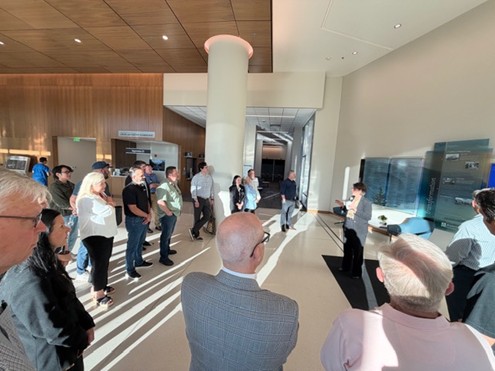
The Council’s report is grounded in extensive statewide engagement, including more than 60 listening sessions, over 1,000 survey responses, and input from businesses, workers, educational institutions, local governments and community organizations throughout Oregon. Asante participated in a local focus group, along with a number of other key stakeholders in southern Oregon.
The report notes that despite significant strengths, rising costs, slowing population growth, declining competitiveness and fragmented policymaking have made it harder for businesses to invest and for communities to thrive. The report separately identifies Oregon’s regulatory climate as a major barrier.
Several recommendations stand out as particularly important.
First, the report focuses on improving Oregon’s business climate. Stakeholders consistently identified permitting delays, regulatory complexity and tax uncertainty as barriers to investment. The Council recommended establishing enforceable permitting timelines, reducing unnecessary administrative burdens and pursuing tax reforms intended to improve competitiveness while maintaining support for essential public services.
For health care organizations, these recommendations matter. Hospitals are among Oregon’s largest employers and serve as critical economic anchors in many communities. The Prosperity Council specifically notes that hospitals contribute approximately $32.4 billion in economic activity and support roughly 160,000 jobs statewide.
Next, the report calls for significant investment in site readiness and infrastructure. Oregon cannot compete for major employers, or adequately address housing needs, without development-ready land, transportation infrastructure, utilities and reliable access to power. The Council recommends a dedicated site readiness and infrastructure fund of $250 million per biennium to help communities prepare employment sites and support future economic growth.
Finally, the Council rightly identifies talent development as an economic imperative. Oregon’s workforce challenges affect every sector, including health care. The report recommends stronger alignment between K-12 education, community colleges, universities and workforce development programs, along with greater investment in higher education and industry partnerships. Oregon employers must be able to hire the skilled workforce necessary to compete and grow while creating pathways to family-wage careers for Oregonians.
The full report can be found here: https://www.oregon.gov/gov/Documents/Oregon%20Prosperity%20Council%20Report_June%202026.pdf.
Where do we go from here
A strong economy is foundational to strong communities. It supports hospitals, schools, public safety, infrastructure and the social services that Oregonians rely on every day. For health care providers, a more competitive and prosperous Oregon means a stronger workforce pipeline, healthier communities and greater stability in delivering care.
The conversation should now shift from whether Oregon faces competitiveness challenges to how we address them.